Bookish Wisdom vs Living Knowledge: The Story of True Understanding
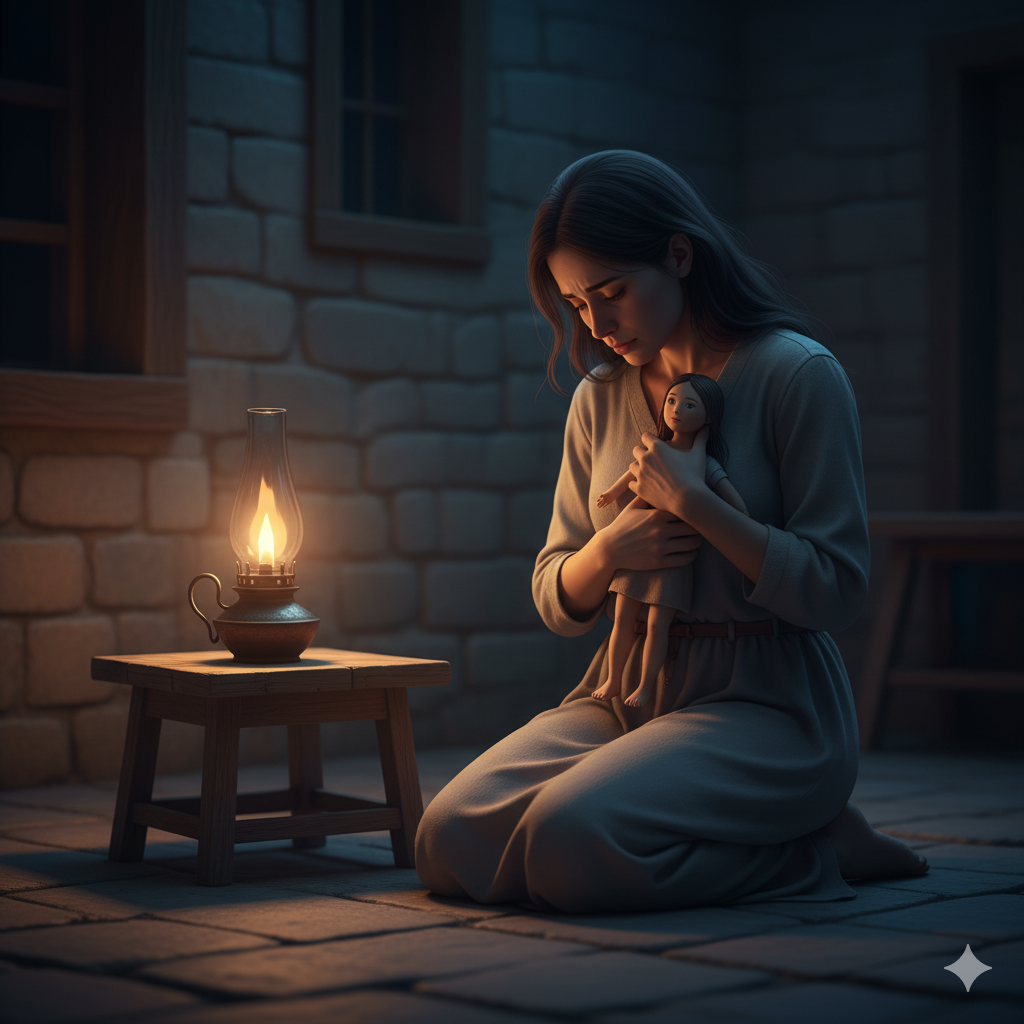
A House in Mourning
.png)
A householder’s only son died. The mother and father cried without rest; neighbors gathered to console them. Learned monks also visited and cited scripture: “The body is mortal; the soul is deathless. What is born must die. Grief cannot alter the law.” The parents heard the words, yet the flood of sorrow did not stop.
After a few days, one monk returned to see how they were. Entering the courtyard, he saw the mother sitting at the door. Tears were flowing again. In her lap lay a small clay doll whose arm had broken off—the child’s toy. Seeing the toy broken, she wept afresh as though the wound had reopened.
“Why Weep for Clay?”—The Monk’s Question
.png)
The monk asked with compassion, “Mother, for whom are you crying now?” She said, “This toy—my child’s clay doll—its arm is broken. Seeing it shattered, my heart breaks again.”
The monk said, “A few days ago, when your living son had just departed, you heard many wise sayings and were urged to be steady. Today you cry for a handful of clay. Do you see? Words spoken from books can roll easily off the tongue; but unless knowledge descends into the heart, it fails at the very moment it is needed. If wisdom cannot console living grief, then what we have memorized is only sound in the air.”
Book Knowledge and Living Wisdom
.png)
What, then, is real knowledge? It is not a storehouse of quotations or arguments. True understanding steadies conduct: it blossoms as self-restraint, compassion, reverence for life, and a quiet mind in adversity. Book knowledge may beautify discourse; living wisdom reforms character. Borrowed words swell pride; realized truth melts it. Borrowed knowledge is a decoration; living wisdom is liberation.
When insight travels from head to heart and into the hands, life itself becomes scripture. Such wisdom speaks less and shines more. It consoles not by lecturing, but by its very presence. Its proof is not in debate but in the fragrance of a purified life.
The Test of Wisdom Is in Sorrow — The Moral
Knowledge that cannot stand in the storm is not yet knowledge. If one jolt of fate knocks us down, we were leaning on borrowed crutches. The purpose of study is not display but deliverance—freedom from blind reactions and habitual grief.
Let remembrance of the child be a lamp of love; let the mind rest in that which does not perish. Let knowledge become realization—in patience, in conduct, in a heart that blesses even while it aches. Scriptures kept only on the tongue are a burden; scriptures lived in daily life become liberation. One may possess a library and yet be poor in peace; another may hold a single truth and be rich in serenity. Therefore let words be few and practice deep. Then, when life surely tests us, wisdom will not flee; it will become strength, and grief will open into compassion.